
Hyper-melanism, the komaini story, and how to tell a real jet-black animal from one that fades. A straight breakdown of the most misunderstood morph in the hobby.
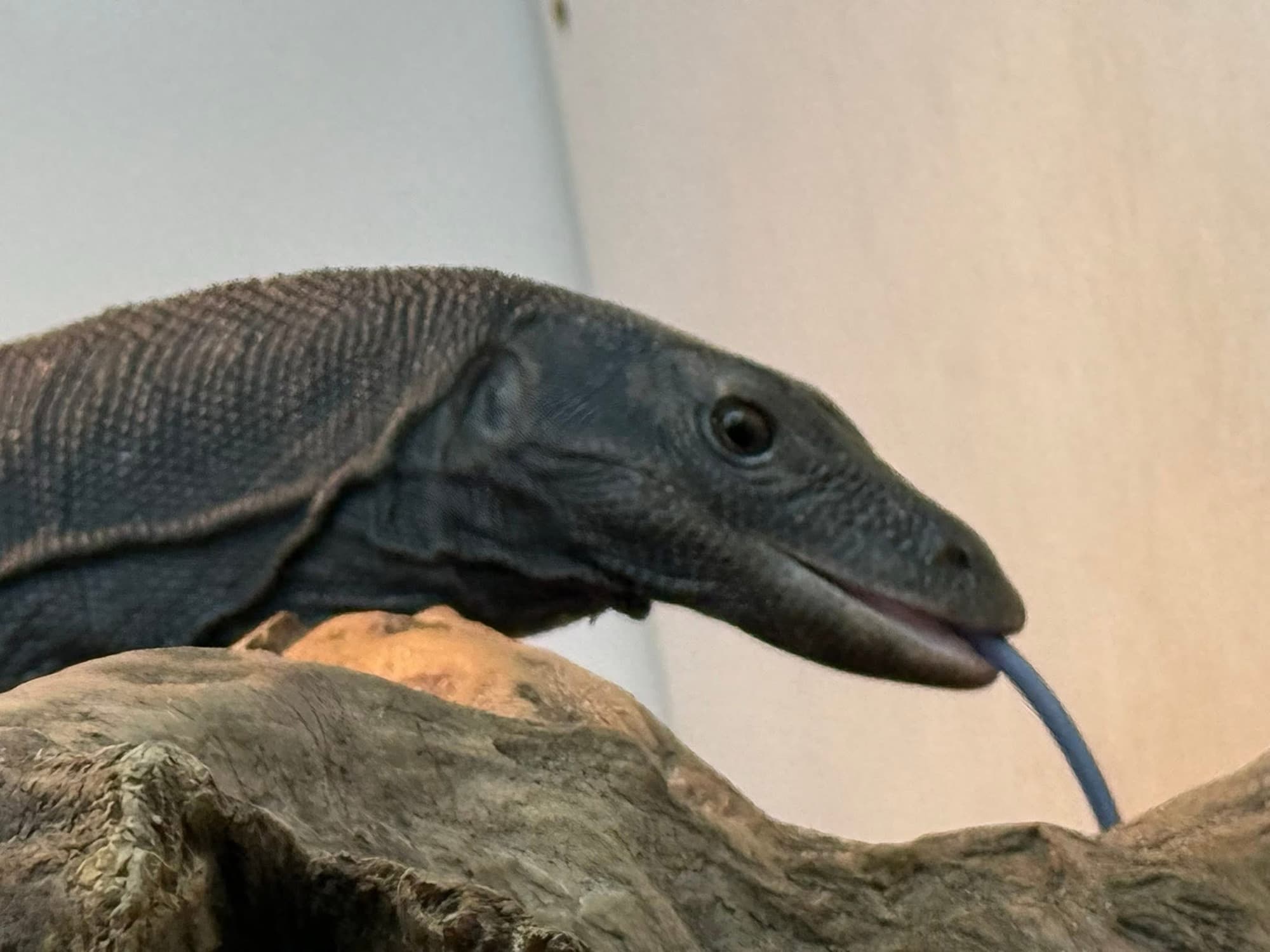
“Black Dragon” gets thrown around loosely. A real one is a hyper-melanistic Varanus salvator: solid black and patternless from the day it hatches, holding that color all the way into adulthood — no yellow spotting, no fade, black in any light.
Where it comes from
The look was historically described from the islands and coast of southwest Thailand and tagged with the old name “komaini.” Today it's understood as a naturally occurring melanistic form of the species rather than a separate subspecies. What matters for a keeper is simpler: it's an inheritable color trait, and producing it cleanly takes selective, deliberate pairing.
How to judge one
Look at a hatchling. A strong Black Dragon is already black and clean at hatch. Weaker animals show residual spotting or muddiness that people convince themselves will “darken up.” Ask to see the sire and dam — our line runs through Chill, our 8-foot-plus male — and ask how the animal held color as it grew.
The bottom line
You're paying for consistency: an animal that will read pure black at three years old, not just at three months. That consistency is the whole point of a dedicated line.
See the animals behind the writing.
Every line I keep is captive-bred, captive-born, and honestly represented.