

Keep it right.
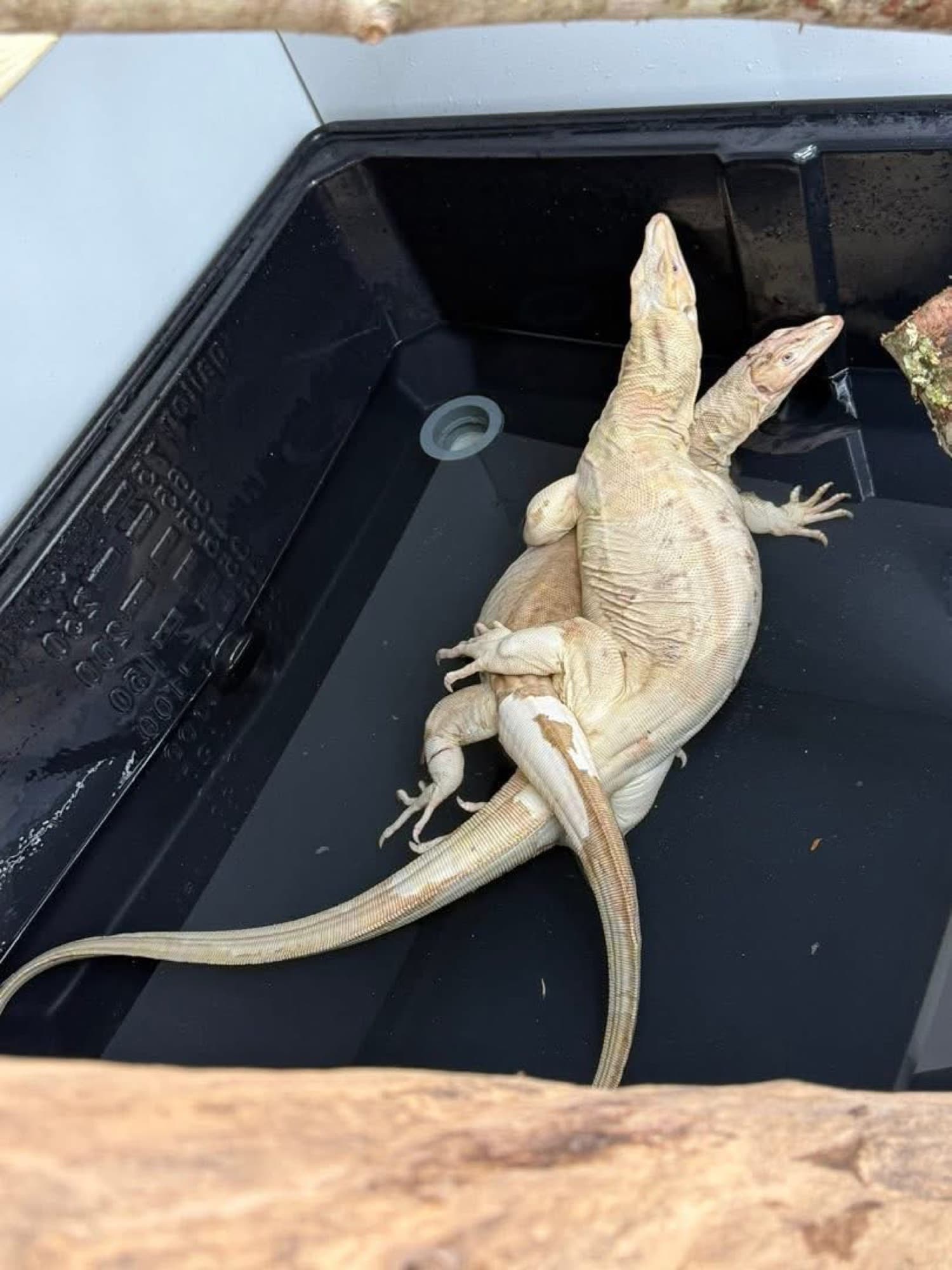
An honest, specific baseline for keeping an Asian water monitor. Every animal also ships with a care sheet tailored to it — and the door's always open for questions.
Enclosure & space
Water monitors need room — think custom-built enclosure, not an off-the-shelf tank. A hatchling can start smaller, but plan ahead: a standard adult wants an 8'×4' footprint or larger. Solid sides, secure locks, and deep substrate for digging are non-negotiable.
Heat & lighting
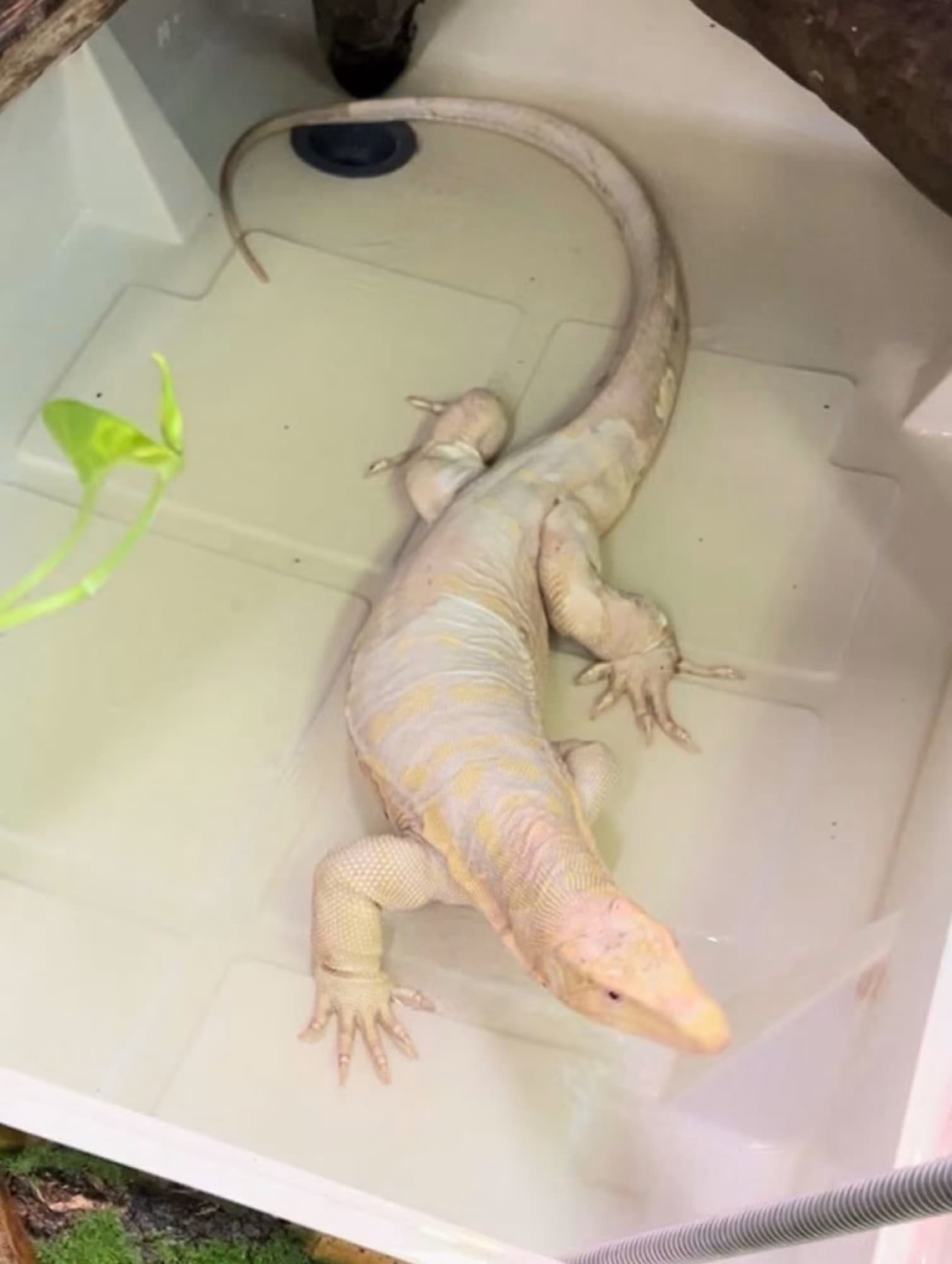
Give a strong basking zone of 120–130°F with an ambient gradient down to the mid-80s, and a night drop into the 70s. Use a cluster of halogen flood bulbs for a wide, even basking surface rather than a single spot. UVB across the basking area supports long-term bone and overall health.
Water & humidity
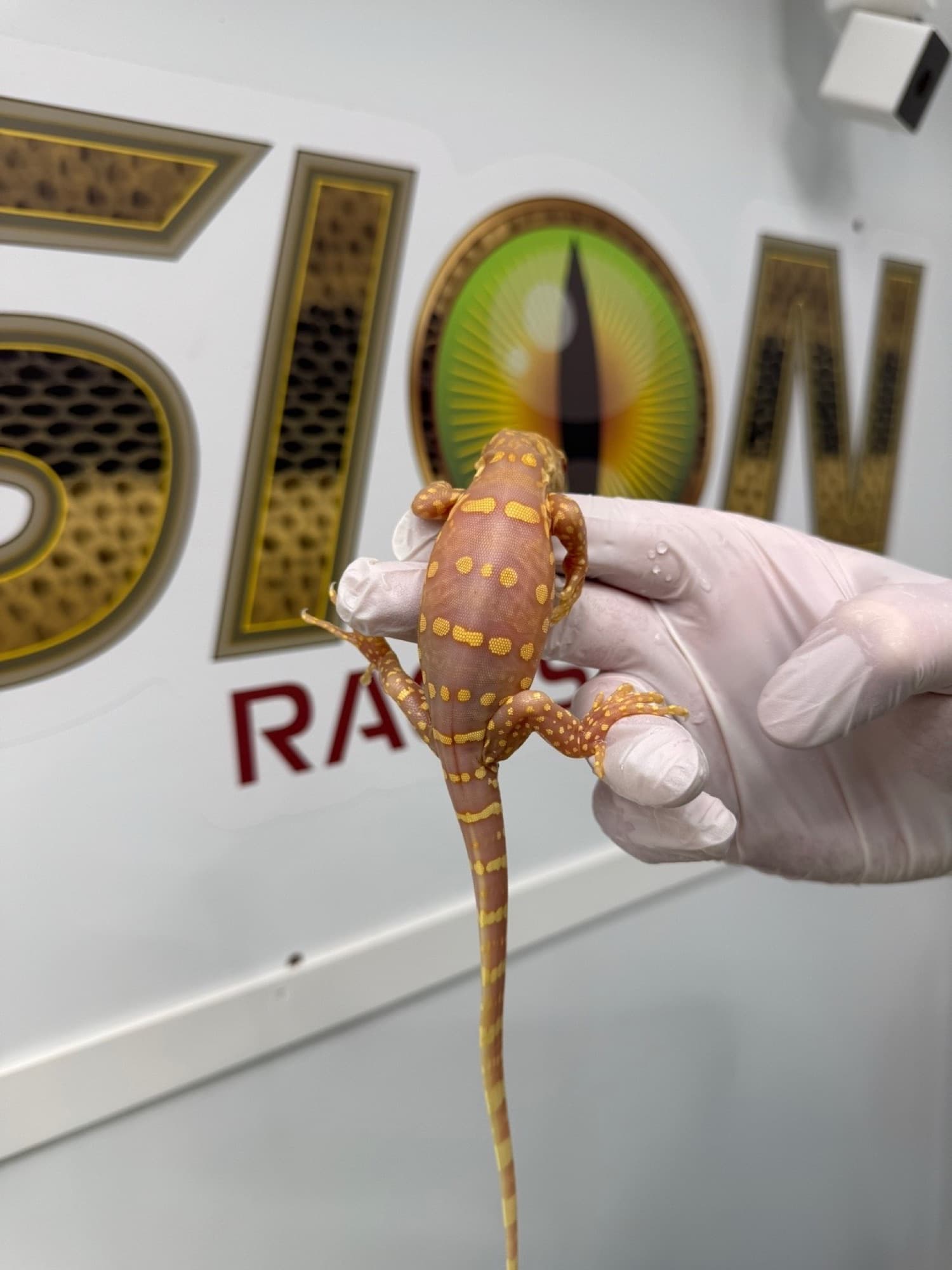
These are semi-aquatic animals — a water feature large enough to fully submerge in is ideal, and they'll use it constantly. Keep humidity in the 60–80% range with a deep, moisture-holding substrate. Good airflow plus moisture prevents the scale and respiratory issues that come from a stale, wet box.
Diet & feeding
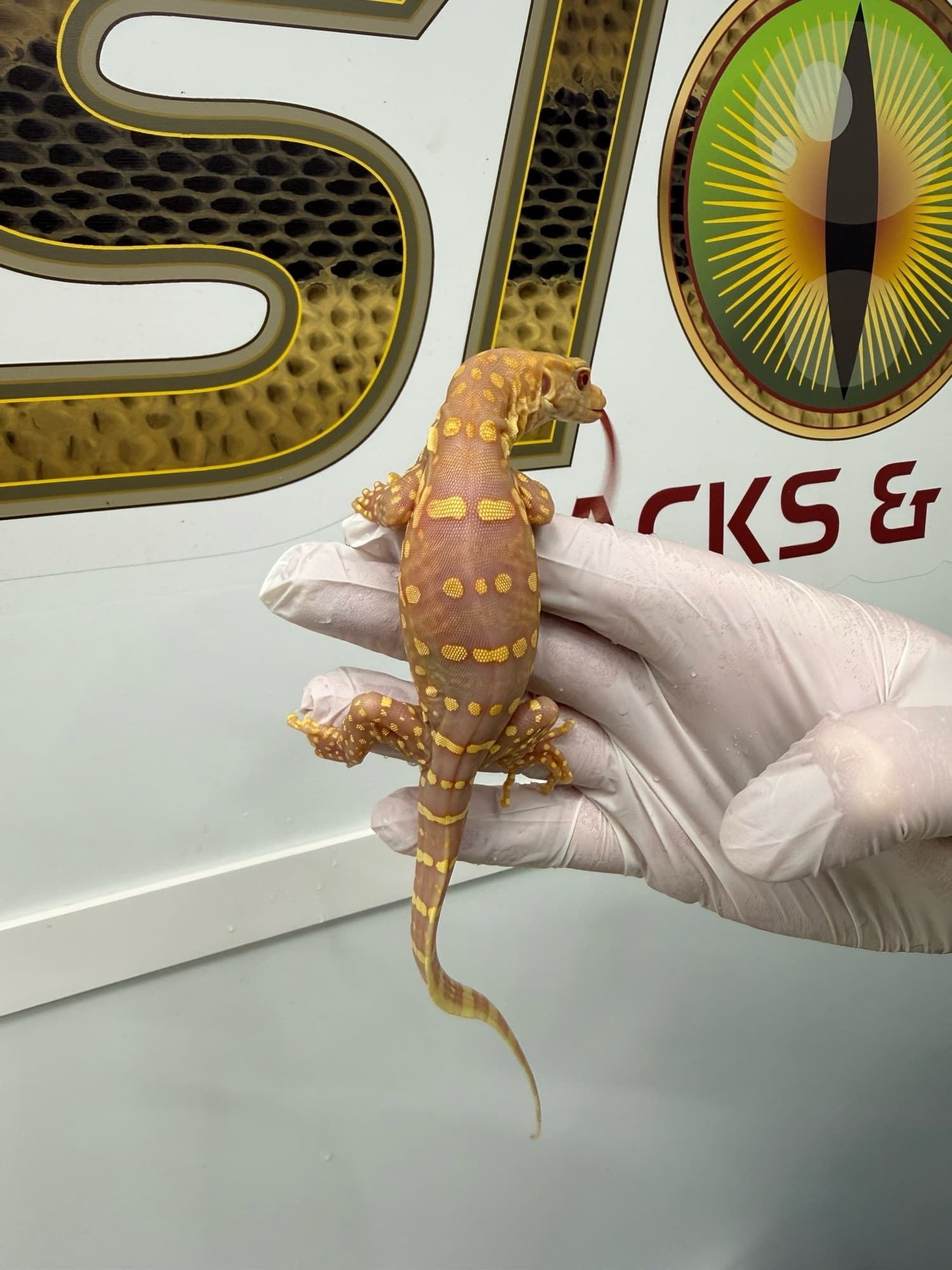
A varied carnivorous diet: whole prey such as rodents, plus insects and lean proteins. Feed appropriately sized items and avoid overfeeding fatty foods — obesity is the most common pitfall in captive monitors. Dust with calcium/D3 as appropriate. Your animal ships with its current feeding schedule.
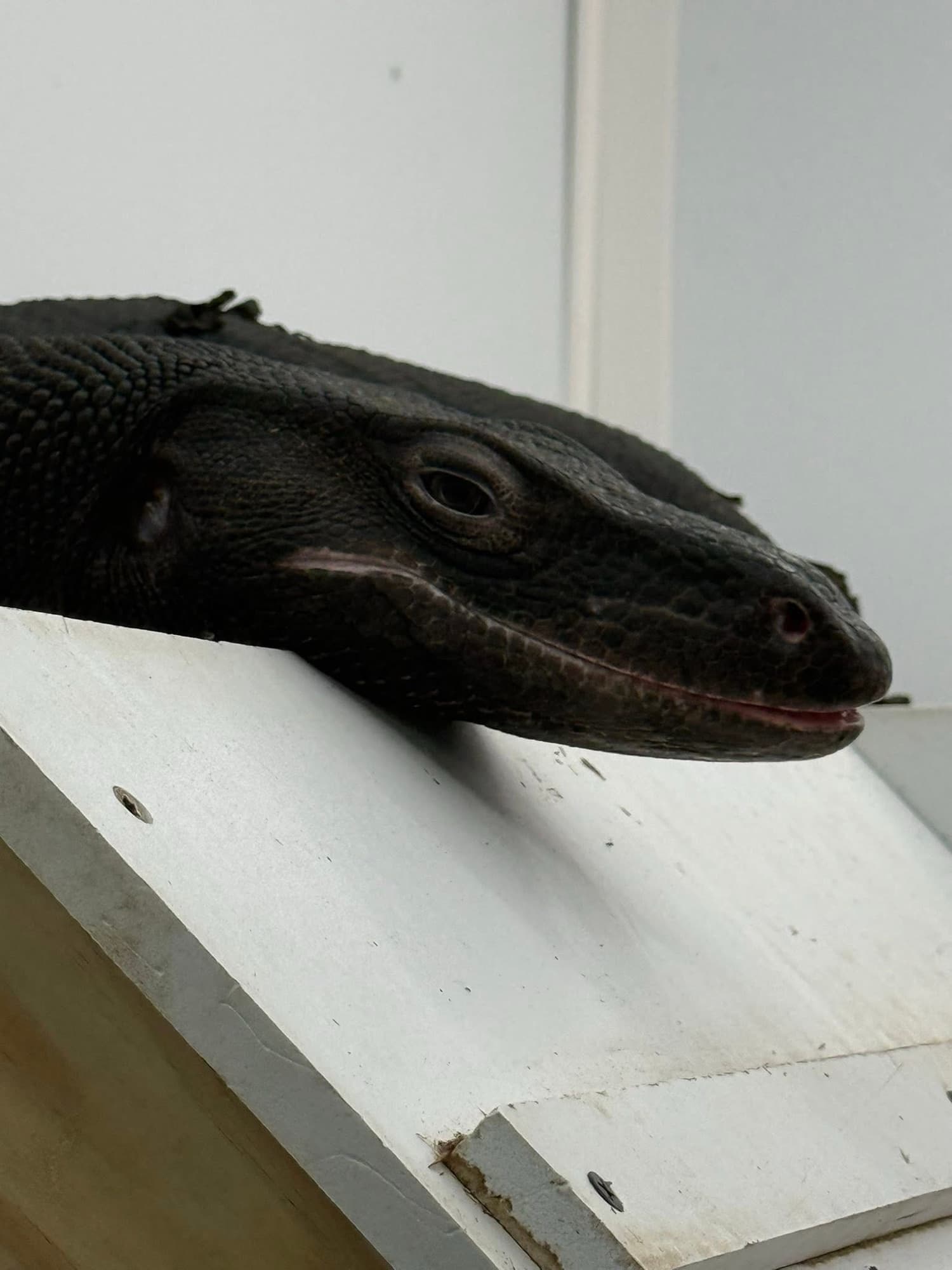
Handling & socialization
I lay the foundation: patient, daily work from the day an animal hatches. But socialization is a partnership — some animals take longer than others, and a new home with new smells and new people can set that progress back. Keep building on the foundation I've laid with short, calm, consistent sessions. Read body language, never grab from above like a predator, and let trust compound. Do that and you'll have a social animal.
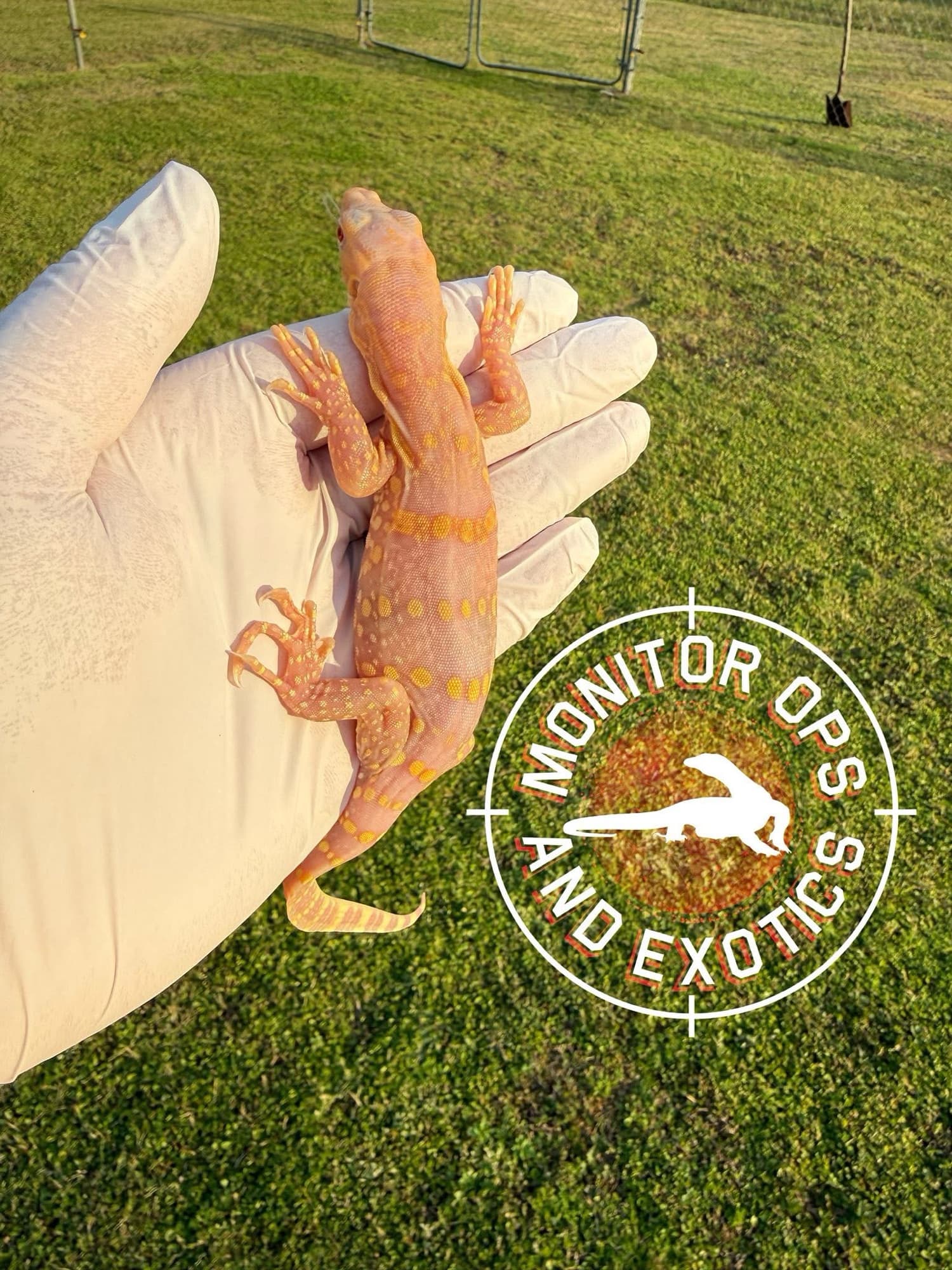
Growth & commitment
Water monitors grow fast and live 15–25 years. This is a long, serious commitment that outpaces most other pet reptiles in space, food, and engagement. Go in with eyes open — and if you ever have questions down the road, I'm a message away.
Set up first. Then we ship.
Get these right before your monitor lands and the transition is seamless. Not sure on a detail? Ask before you buy — we'd rather you get it right.
Questions before you commit?
Read up in the Journal, or just ask me directly — I'd rather answer first than have an animal end up in the wrong setup.
General guidance — not a substitute for the animal-specific care sheet I send with every monitor.