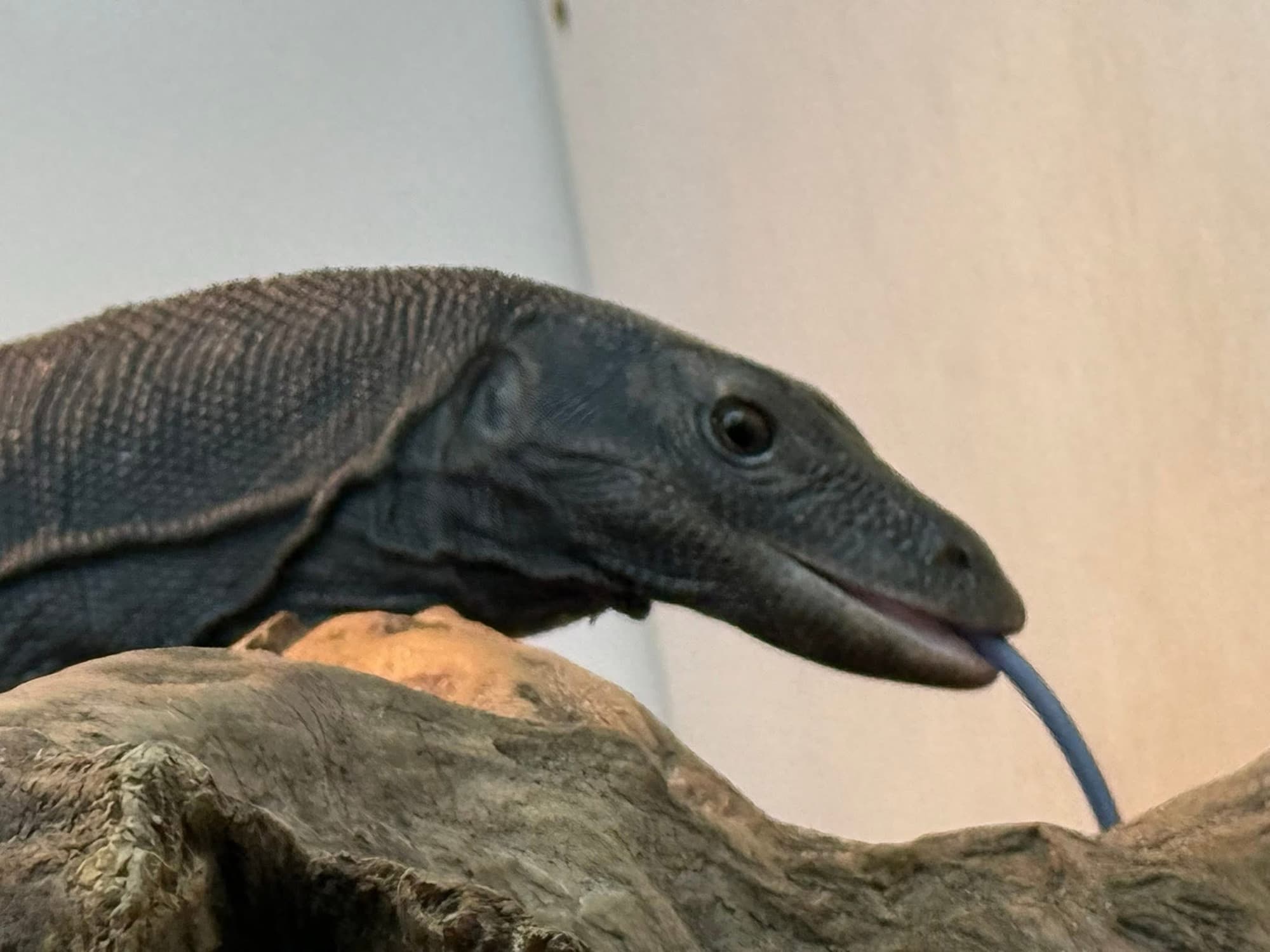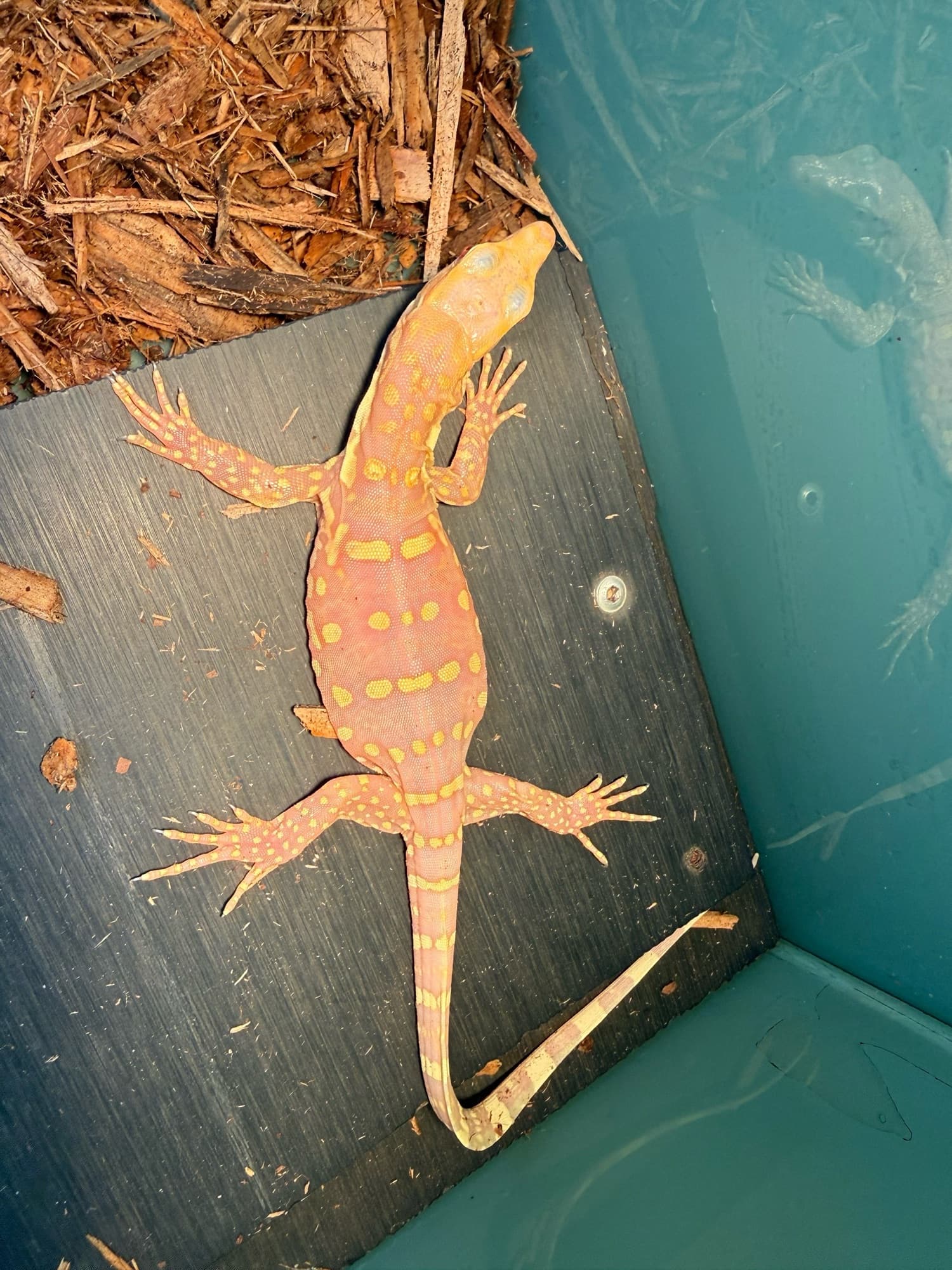

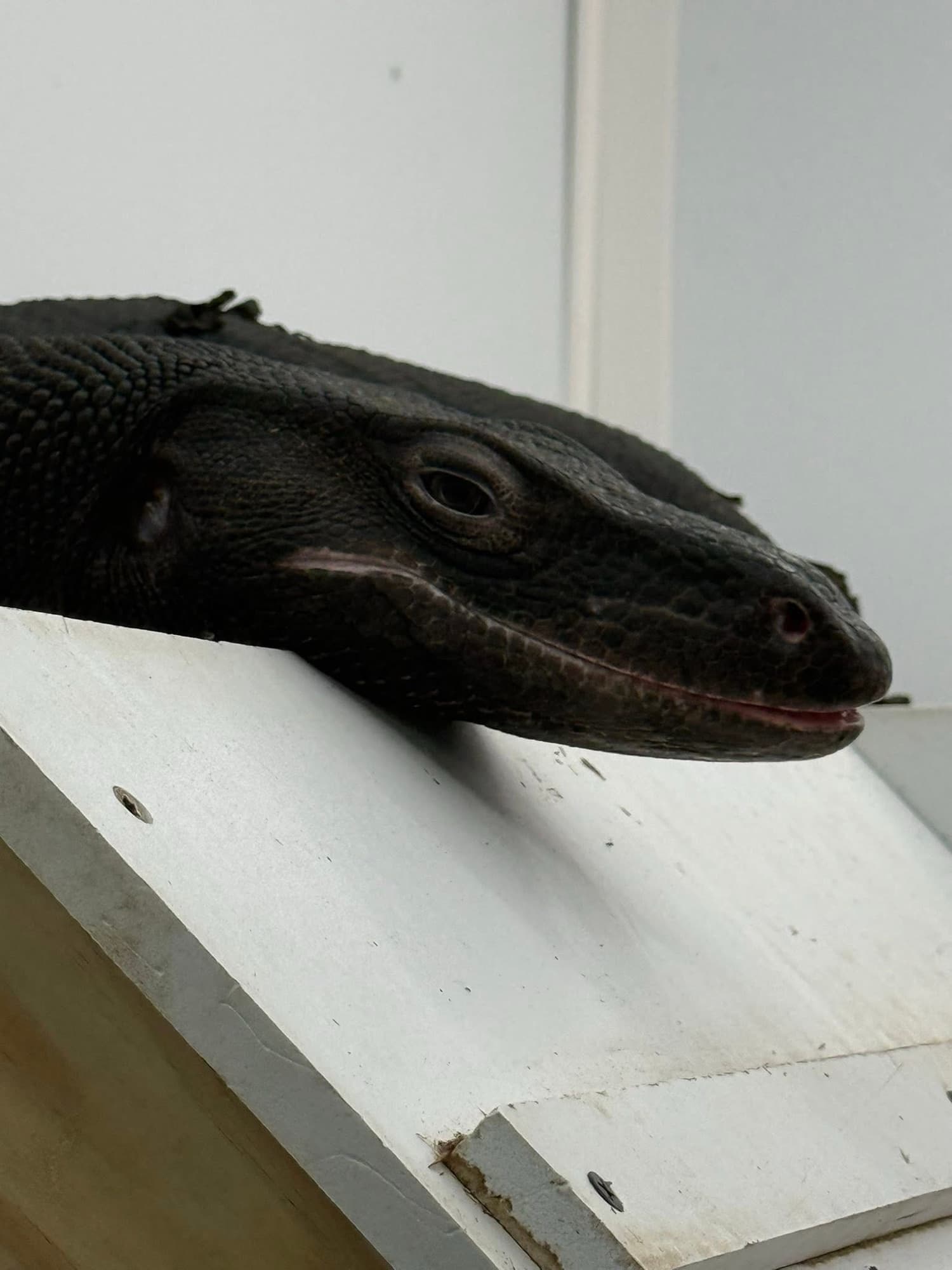
I won't promise you a social water monitor. What I will promise is that the groundwork is done — and that the rest is on both of us.
“Socialized from hatch” gets used as a marketing line, and I'm not going to use it that way. Here's the honest version: I put in patient, daily work from the day an animal hatches so it grows up reading people as neutral or positive rather than as a predator. That's a foundation. It is not a guarantee.
Why I won't promise you a social monitor
I've been doing this and socializing monitors for years, and I've watched it happen: an animal that is completely social here goes to a new home, hits new smells, new sounds, new people — and reverts. It loses some of that trust. Not all of them do it, but enough do that I refuse to send someone an animal promising a super social baby. It's a slippery slope, and I'd rather set the expectation correctly than have you disappointed or, worse, have the animal set back.
The predator problem
Reach down over a monitor and you're doing exactly what a hawk does. Un-socialized animals respond accordingly — tail-whip, claws, and jaws. The fix is boring and consistent: approach from underneath, move slowly and deliberately, and build the animal's confidence over weeks, often starting in shallow water.
Your half of the work
Every animal I place has had the groundwork done. Some take longer than others. When it lands with you, keep going — short, calm, consistent sessions, read its body language, don't rush it. Build on the foundation I've laid and you'll end up with the animal you wanted. Skip that part, or make a mistake early, and it can set back. That's just the honest reality of socializing a big, smart lizard.
See the animals behind the writing.
Every line I keep is captive-bred, captive-born, and honestly represented.